At the UN and UNESCO, the OIEC acts as the voice of Catholic education
International representation is one of the key missions of the International Office of Catholic Education. Through its presence at the United Nations and UNESCO, the OIEC ensures that the experiences of educational communities and the realities faced by children are taken into account in major international discussions.
In 2026, a number of initiatives helped to raise awareness of key priorities: the right to education, child protection, peace, inclusion, artificial intelligence and the transformation of education systems.
Upholding the right to education at the Human Rights Council
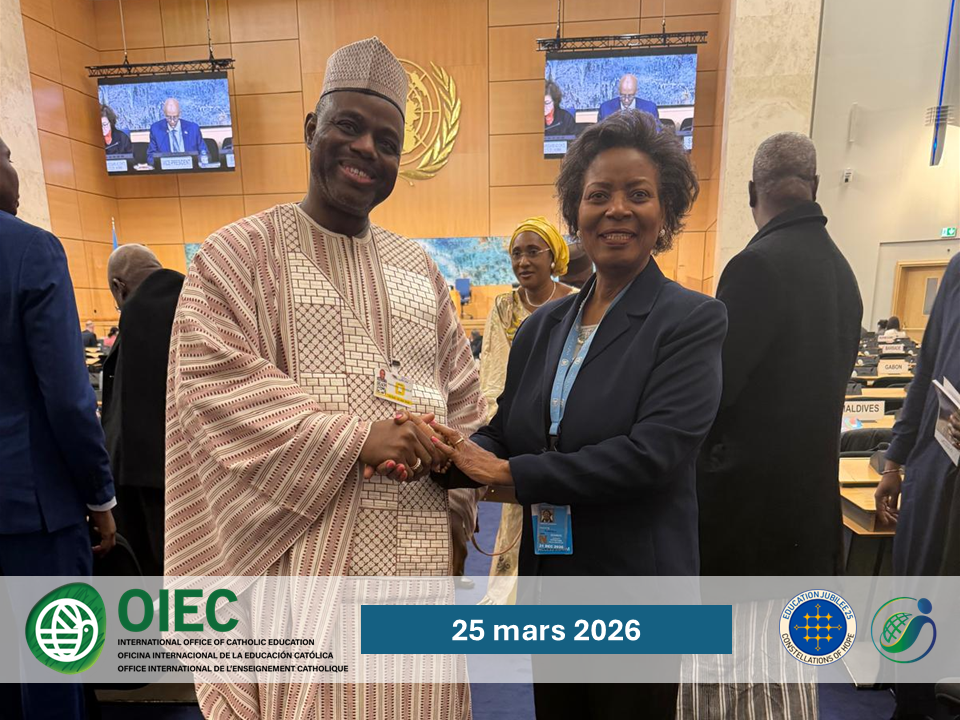
On 27 March 2026, during the 61st session of the United Nations Human Rights Council in Geneva, Paulette Diakité-Lacroix, the OIEC’s representative to the United Nations, spoke during the dialogue on the human rights situation in Mali.
She drew attention to the consequences of insecurity for children and educational communities: school closures, population displacement, attacks on school infrastructure and a widening of inequalities in access to education. The OIEC placed particular emphasis on the situation of girls, who are especially vulnerable to dropping out of school, violence and early marriage.
It called for greater cooperation to ensure the continuity of education in crisis situations, emphasising that schools are places not only for learning but also for protection, resilience and peace-building.
Artificial intelligence that serves people
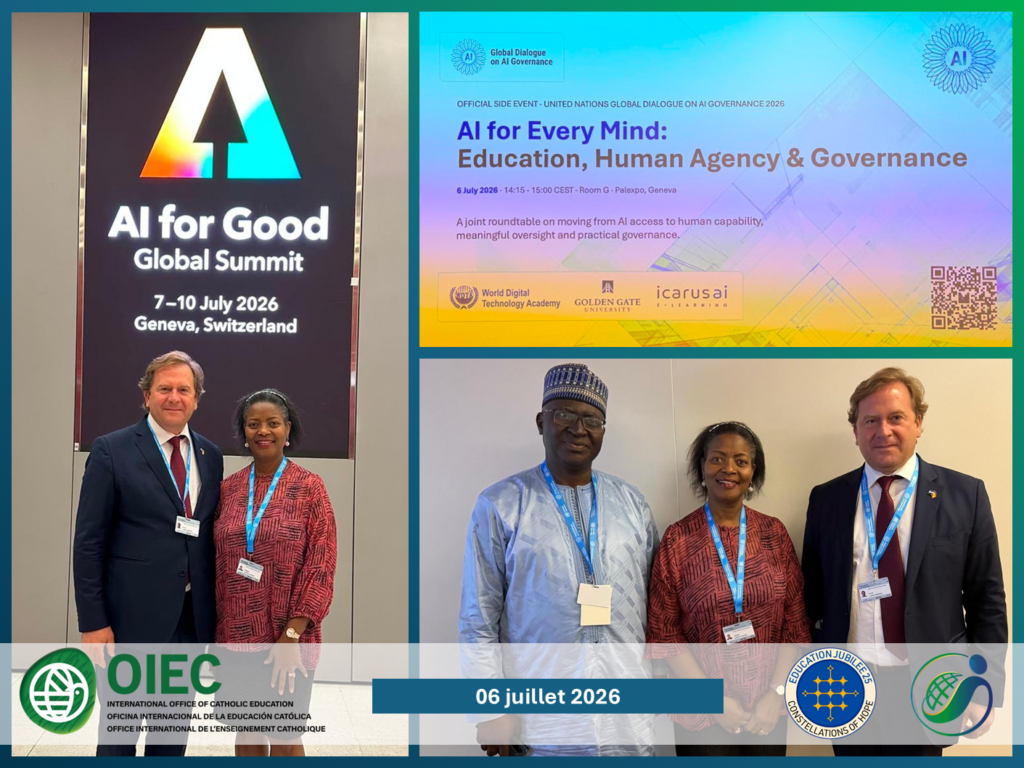
On 6 and 7 July 2026, the OIEC attended the first Global Dialogue on the Governance of Artificial Intelligence in Geneva, organised by the United Nations.
At the meeting, the OIEC advocated an approach to artificial intelligence based on human dignity, the protection of children and respect for their rights. Personal data, privacy, inequalities in access, teacher training and education in critical thinking must be fully integrated into international decision-making.
Whilst artificial intelligence offers new opportunities for learning and supporting pupils, it must be subject to clear, ethical and protective governance. Technological innovation must always remain at the service of the individual and the common good.
Playing a part in the global transformation of education
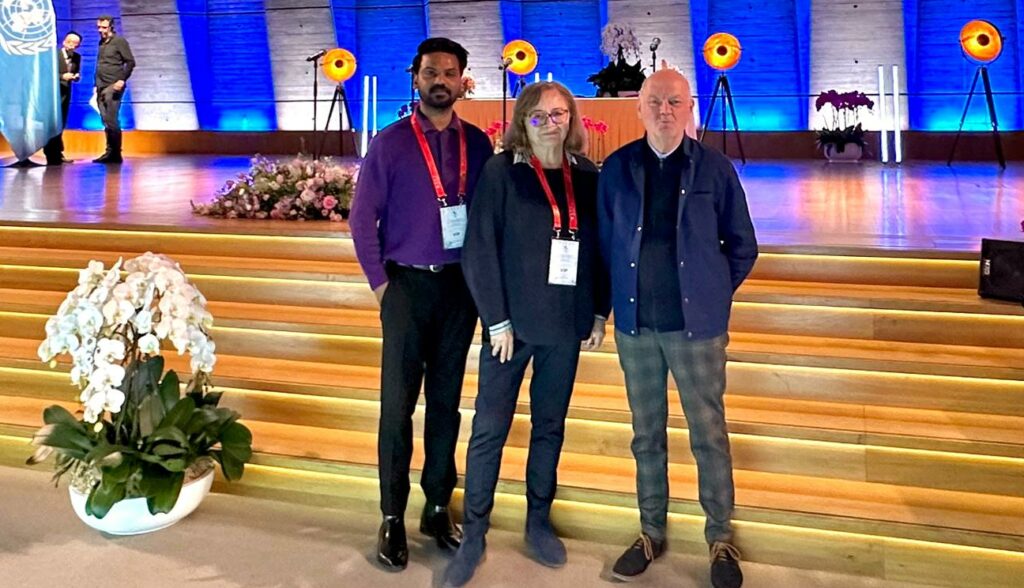
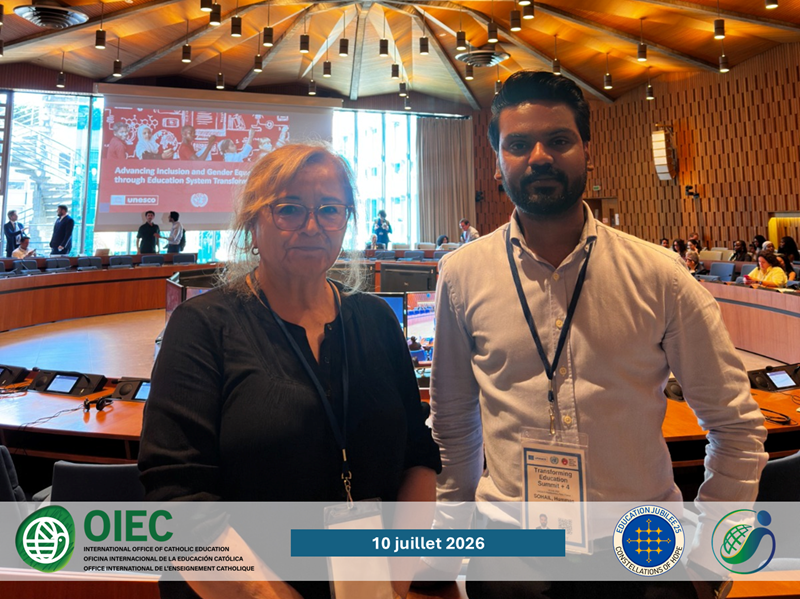
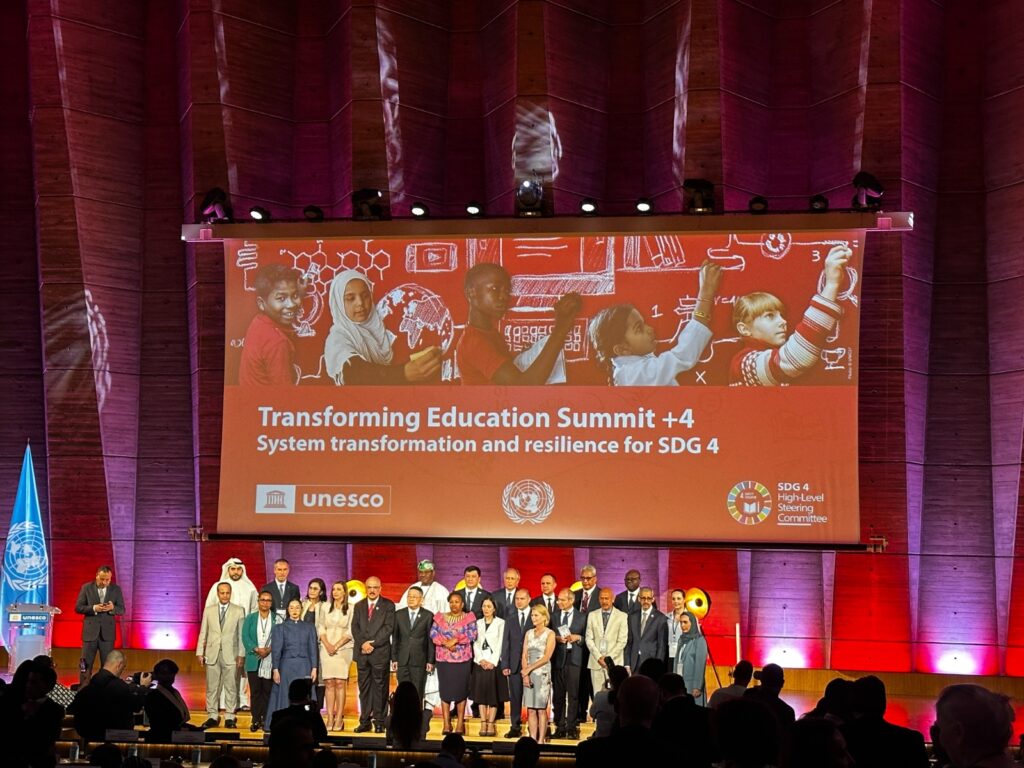
On 10 July 2026, the OIEC, represented by Gloria Parra, Michel Bertet and Hummas Sohail, took part in the Transforming Education Summit +4, held at UNESCO headquarters in Paris.
The aim of this meeting was to assess the progress made since the 2022 Summit on the Transformation of Education and to accelerate progress towards Sustainable Development Goal 4: to ensure inclusive, equitable and high-quality education for all.
Discussions centred on the funding of education, teacher training, inclusion, gender equality, digital transformation and the capacity of education systems to cope with crises. The OIEC thus reaffirmed the contribution of Catholic schools to this global effort, particularly through their focus on each individual and on the most vulnerable.
Education at the heart of a culture of peace
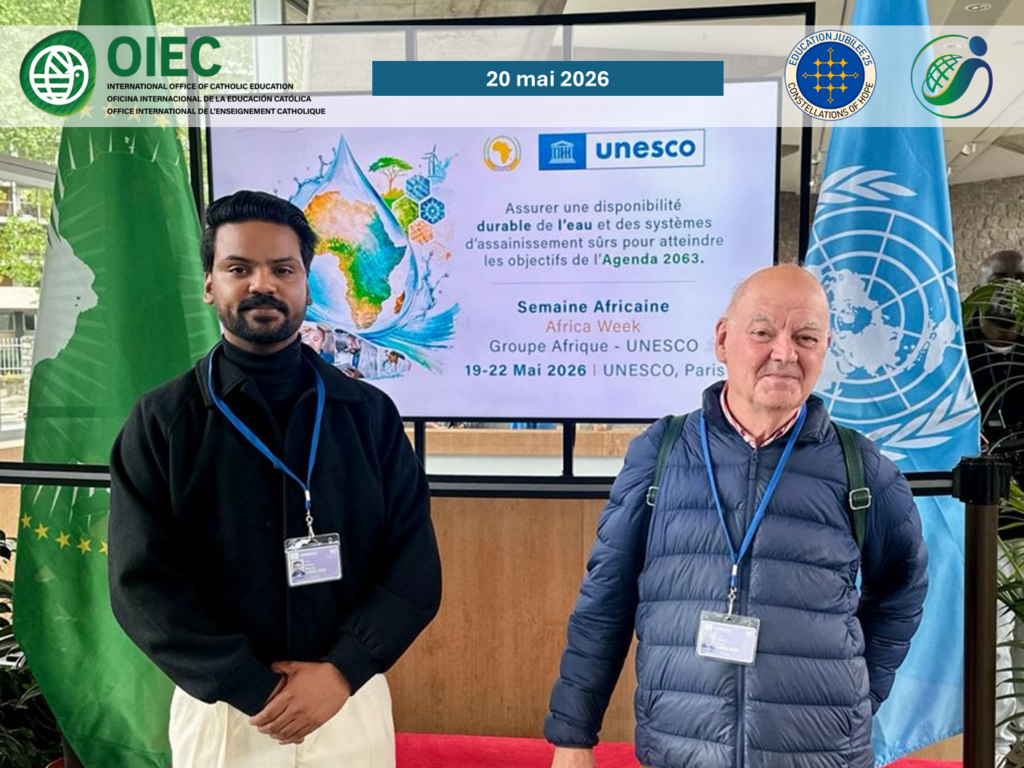
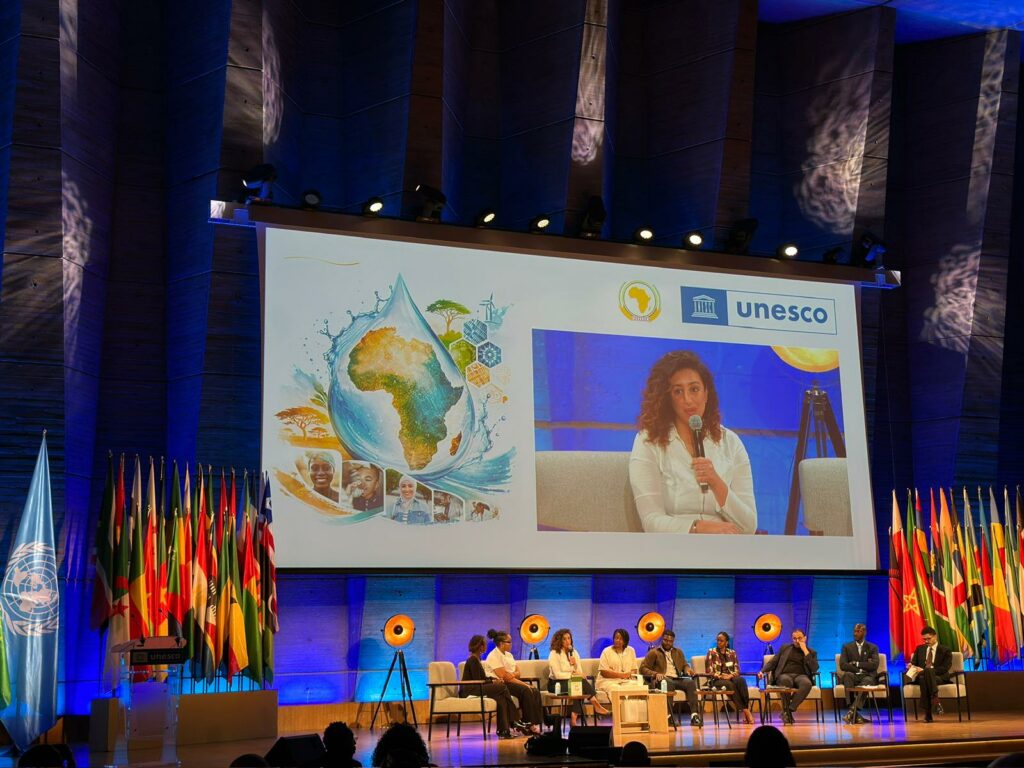
On 8 July, Gloria Parra and Hummas Sohail, OIEC representatives to UNESCO, also took part in the first dialogue on the culture of peace in Africa.
Organised in the run-up to the fourth Luanda Biennale, this meeting brought together experts, UNESCO Chairs and UNITWIN networks to discuss the contribution of African knowledge and governance systems to the development of more peaceful, inclusive and sustainable societies.
For the OIEC, a culture of peace begins at school. It is built through dialogue, active listening, cooperation, the recognition of different cultures, and the promotion of knowledge drawn from local communities and traditions.
Linking the realities on the ground to international decisions
Through the involvement of its representatives at the UN and UNESCO, the OIEC bridges the gap between the realities experienced in schools and the forums where major international policies are shaped. To be the voice of Catholic education is to defend every child’s right to a quality education in a safe environment, to share the experiences of schools, and to contribute to fairer and more humane international responses.